
Air War Vietnam
Why U.S. Airpower Failed Strategically in Vietnam

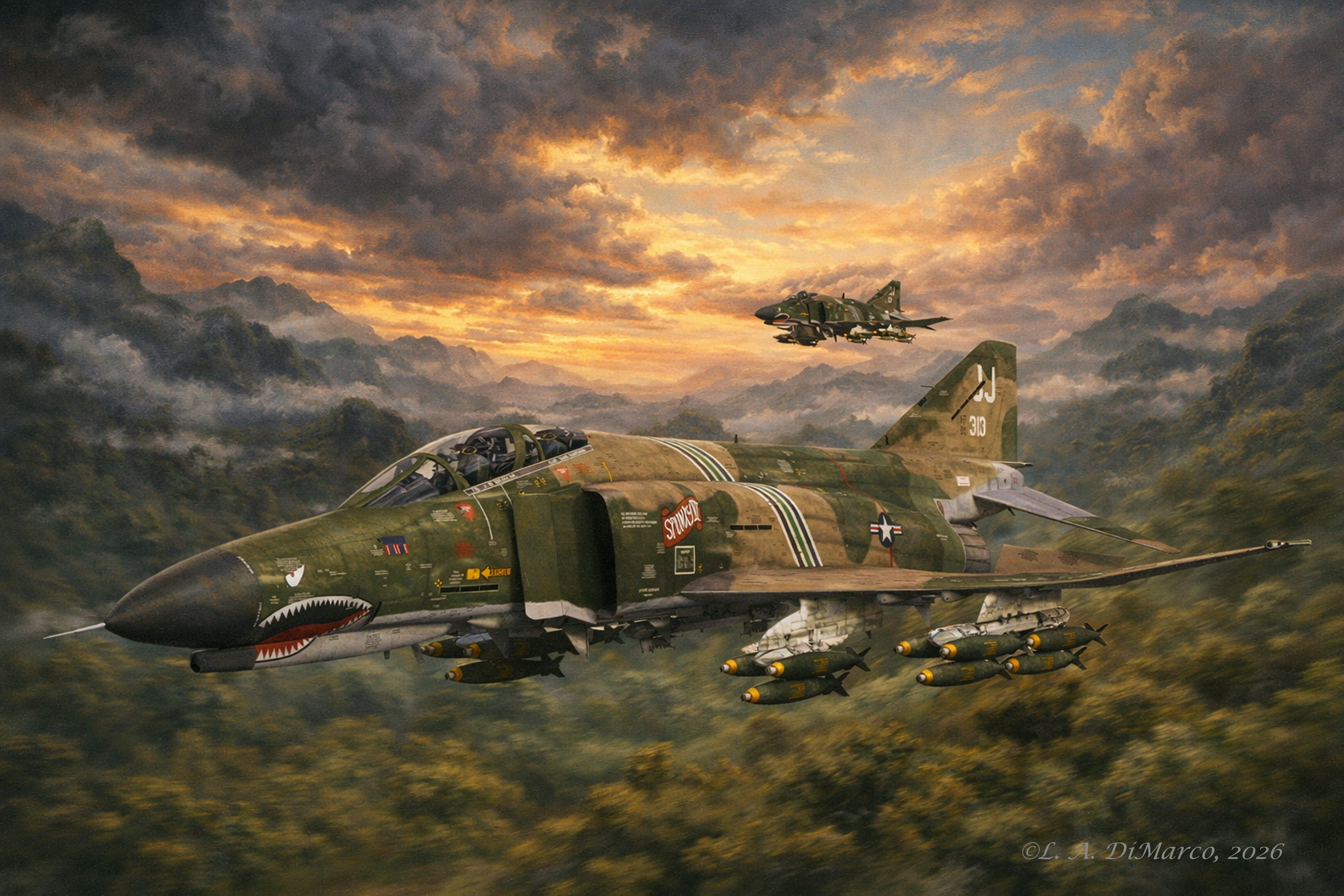
The Vietnam War witnessed one of the most extensive applications of air power in history. The United States and its allies employed air power in diverse roles – from strategic bombing of targets in North Vietnam, to close air support and helicopter operations in South Vietnam, to aerial interdiction of communist supply lines through Laos and Cambodia. In total, an astonishing volume of ordnance was expended. Between 1964 and 1973, over eight million tons of bombs were dropped in Southeast Asia – far exceeding the tonnage expended by all sides in World War II.<sup>1</sup> Yet despite this overwhelming firepower from the air, the final outcome of the conflict was a North Vietnamese victory. Less than two years after the last U.S. B-52 raids in 1973, all of Indochina had fallen to communist forces.<sup>2</sup> This paradox of immense air power yielding disappointing strategic results has led to enduring debates about the effectiveness and limitations of air warfare in Vietnam.
The Vietnam conflict was fundamentally different from the high-intensity wars America had fought earlier in the 20th century. It began as a guerrilla insurgency in South Vietnam – a struggle for political control of the rural population – rather than a conventional battlefield confrontation. As U.S. involvement deepened and North Vietnam committed its own regular forces, the war evolved to include larger-scale battles and even pitched conventional engagements, yet it always retained an irregular, political character. These conditions posed unique challenges for air power. American leaders hoped that superior airpower could bolster South Vietnam’s defenses and coerce North Vietnam into peace, all while avoiding a larger ground war or direct conflict with China or the Soviet Union. Vietnam thus became a major test of whether modern air power could achieve strategic objectives under the constraints of a limited war.
Some U.S. military leaders later argued that air power in Vietnam was potent but was shackled by political restrictions—Admiral Ulysses S. Grant Sharp, who oversaw the air war, insisted that “our airpower did not fail us; it was the decision makers” who squandered its potential.<sup>3</sup> Other observers countered that no amount of bombing could have secured victory in a fundamentally political and people-centric war, suggesting that the limits lay not just in strategy but in air power itself when applied to this kind of conflict.<sup>4</sup> This paper examines the role of American air power in the Vietnam War, analyzing how it was employed, what it achieved, and why it ultimately failed to secure victory. The study spans the early advisory period of 1961–1964, the major air campaigns against North Vietnam (notably Operation Rolling Thunder and later Linebacker strikes), and the extensive use of tactical air support within South Vietnam. Key questions include: How did U.S. air strategy evolve over the course of the war? What impact did air operations have on communist forces and the broader trajectory of the conflict? In what ways did political constraints and restrictive rules of engagement shape the air war’s effectiveness? Finally, what lessons emerge from Vietnam’s air war for modern military strategy, including today’s concept of joint multi-domain operations?
The central argument presented is that American air power in Vietnam achieved notable tactical successes and was indispensable in many battles, but its strategic effectiveness was undermined by the nature of the war and by self-imposed constraints. Air power alone could not compensate for an unsound overall strategy and severe problems on the ground. U.S. bombing campaigns inflicted tremendous damage on the enemy’s infrastructure and personnel, but they could not break the enemy’s will or capacity to fight a protracted, unconventional war. Meanwhile, when integrated closely with ground operations, air power proved highly effective at the tactical and operational level – foreshadowing the modern emphasis on multi-domain integration. Thus, the Vietnam experience highlights both the potential and the limits of air power. In exploring these themes, the paper draws upon a range of historical documents, operational evaluations, and scholarly assessments of the Vietnam air war.
In the sections that follow, we first outline the early U.S. involvement in Vietnam and the initial uses of American air power in the counterinsurgency effort. We then examine the escalation of the air war with Rolling Thunder (1965–1968) and the concurrent air operations supporting U.S. and South Vietnamese ground forces. Next, the narrative turns to the later years (1969–1972) when Vietnamization occurred and heavy bombing was resumed under Linebacker I and II. Finally, we analyze the overarching reasons for the failure of U.S. air strategy in Vietnam and consider the conflict’s lasting influence on air power doctrine and joint operations. The conclusion connects the Vietnam air war’s lessons to the challenges of employing air power in the 21st century’s joint multi-domain environment, where the integration of air power with other forces remains critical.
Theoretical Framework – Coercion, Airpower, and the Vietnam Paradigm
Airpower in Vietnam was not merely a tactical or operational tool; it was envisioned as a central instrument of strategic coercion. To understand why airpower failed to achieve U.S. strategic aims in the Vietnam War, one must first situate its use within the broader framework of coercion theory—a branch of strategic thought most closely associated with the work of Thomas Schelling. Schelling defined coercion as the use of threatened or actual force to influence the behavior of an adversary, distinguishing between deterrence (preventing action) and compellence (changing ongoing behavior).<sup>5</sup> In Vietnam, U.S. leaders sought to compel North Vietnam to cease its support for the insurgency in the South, primarily through the application of punitive airstrikes.
Coercion through airpower typically follows one of two conceptual models: punishment or denial. Punishment seeks to raise the costs of continued defiance by inflicting pain, often targeting economic or civilian infrastructure. Denial, in contrast, aims to prevent the adversary from achieving its goals by destroying its military capabilities and logistics. In theory, both strategies are supposed to influence the enemy’s decision calculus and compel behavioral change.<sup>6</sup> Vietnam, however, presented a complex test for both approaches.
The United States’ first major attempt at strategic coercion in Vietnam came with Operation Rolling Thunder (1965–1968). Intended to signal resolve and gradually increase pressure, Rolling Thunder aligned more with the punishment model—although weakly and inconsistently executed. As Robert Pape later argued in Bombing to Win, the incremental and tightly controlled nature of the campaign deprived it of the shock effect required to generate psychological dislocation.<sup>7</sup> Instead of shocking Hanoi into submission, it signaled hesitancy, allowing North Vietnam to prepare militarily, politically, and psychologically for prolonged bombardment.
One of the central issues with the U.S. application of coercive airpower in Vietnam was the problem of asymmetry of resolve. North Vietnam considered the war existential—defeat meant national disunity and failure of its revolutionary project. For the United States, Vietnam was a limited conflict on the periphery of the Cold War, fought to preserve credibility and contain communism rather than for survival. In this imbalance, U.S. strategic bombing campaigns were unlikely to compel a hardened, ideologically driven enemy to back down—especially when the American electorate itself grew increasingly weary of the war.<sup>8</sup>
Compounding the problem was the assumption among U.S. civilian and military planners that Hanoi’s decision-making was rational in Western terms and responsive to cost-benefit calculations. This mirrored the logic of deterrence developed in the nuclear context, but it proved ill-suited for a war of national liberation and ideological fervor. As Phillip Haun notes in his 2024 assessment of tactical airpower, Tactical Air Power and the Vietnam War, airpower works best when it places the enemy in an operational dilemma—concentration risks air attack, dispersion risks defeat on the ground.<sup>9</sup> But strategic coercion through bombing lacked that clarity in Vietnam. Rather than being forced into a corner, North Vietnam maneuvered through the pressure, adjusted its tactics, and redoubled its effort.
U.S. leaders further misunderstood the mechanisms by which coercion operates. Schelling emphasized that coercion requires communication: the adversary must understand the threat, the demands, and the conditions for restraint. Rolling Thunder failed on all three counts. Its objectives were vague, its escalation patterns indecipherable, and its pauses confusing.<sup>10</sup> North Vietnam interpreted the campaign not as a warning, but as proof that the United States was unwilling to escalate fully or invade. From this, Hanoi drew the opposite conclusion from what U.S. planners intended: that it could outlast American pressure.
In this context, political constraints and gradualism were not merely tactical issues—they undercut the very foundation of coercive strategy. The idea of escalation control—carefully calibrating violence to send signals without provoking wider war—was central to President Lyndon B. Johnson’s war management approach. However, coercion in airpower is most effective when the threat of uncontrolled escalation looms. When escalation is so tightly managed that the adversary knows precisely what is off-limits, as Hanoi did, it weakens the threat and neutralizes its deterrent value.<sup>11</sup>
Moreover, the type of war being fought in Vietnam did not lend itself to strategic bombing in the classical sense. Unlike Germany or Japan in World War II, North Vietnam had limited industrial infrastructure, few concentrated strategic targets, and a population accustomed to hardship. Much of its war effort depended on low-tech logistics—trucks, porters, bicycles—and a distributed supply system that could adapt and recover. Hanoi’s leaders also enjoyed strong political control and an internal propaganda system that insulated them from domestic backlash, making them less vulnerable to psychological disruption through aerial punishment.
These doctrinal and strategic blind spots were not limited to Rolling Thunder. Later in the war, Linebacker I and II applied coercion more effectively through a denial strategy—attacking logistics nodes and transportation infrastructure with fewer political restraints and better technology. The temporary success of Linebacker II in compelling Hanoi back to the Paris Peace Talks has been cited by proponents of strategic bombing as proof of its value.<sup>12</sup> But even here, the long-term effect was tenuous: South Vietnam fell just two years later, and North Vietnam’s basic objectives remained unchanged.
Thus, the theoretical framework of coercion, while valid in structure, was poorly adapted to the Vietnam context. The war’s irregular character, North Vietnam’s willpower, the constrained nature of U.S. escalation, and the misapplication of coercion logic all contributed to the ineffectiveness of airpower as a strategic tool. These conceptual failures form the backdrop against which the operational and tactical use of airpower must be understood.
Operation Rolling Thunder – Escalation Without Strategy
Launched in March 1965, Operation Rolling Thunder was the first sustained American bombing campaign against North Vietnam and remains one of the most studied examples of coercive airpower failure in modern military history. Framed initially as a measured response to communist aggression following attacks on U.S. bases and advisors, Rolling Thunder evolved into a multi-year campaign intended to interdict supply lines, destroy war-supporting infrastructure, and most importantly, break North Vietnam’s will to continue prosecuting the war in the South. Yet despite over three years of bombing and more than 864,000 tons of ordnance dropped, the operation ended in 1968 without achieving any of its strategic goals.<sup>13</sup>
The objectives of Rolling Thunder were neither static nor coherent. From the outset, there was ambiguity within the Johnson administration regarding what the campaign was supposed to accomplish. Was it punishment for the attack on U.S. forces? A signal of American resolve? A denial operation to interdict supplies? Or a direct tool to compel North Vietnam to negotiate? In truth, it was all of these at various moments—yet without a clear, prioritized strategy, airpower was deployed in a halting and inconsistent manner.<sup>14</sup> The lack of a unified command and control system further exacerbated the confusion. While the Air Force and Navy each executed missions in assigned “Route Packages,” coordination between the two was minimal, leading to redundancy and inefficiency.<sup>15</sup>
Perhaps the most damning structural flaw of Rolling Thunder was the degree of political micromanagement imposed by civilian leaders. In an effort to prevent escalation into a wider war with China or the Soviet Union, President Johnson personally approved many strike packages, often reviewing targets in Tuesday morning “lunches” with Secretary of Defense Robert McNamara and his advisors.<sup>16</sup> This centralization of targeting authority led to inflexible rules of engagement (ROE). For instance, aircraft were forbidden to strike surface-to-air missile (SAM) sites unless fired upon first, even though intelligence had identified their construction well in advance.<sup>17</sup> Pilots could not engage North Vietnamese MiGs on the ground, despite the risk these aircraft posed once airborne. Industrial targets near Hanoi and Haiphong were placed off-limits for most of the campaign’s duration—ostensibly to avoid provoking Soviet or Chinese retaliation, but at the cost of operational coherence.
The strategic impact of this caution was stark. North Vietnam had time to build and harden its air defenses, many of which were supplied by the Soviet Union and China. By 1967, the country boasted one of the densest and most integrated air defense networks in the world. U.S. aircraft faced radar-guided AAA, mobile SAM batteries, and increasingly aggressive MiG interceptors operating under ground-controlled interception.<sup>18</sup> This forced U.S. aircrews to adapt in real time with electronic jamming, evasive maneuvers, and new tactics like “Iron Hand” missions designed to suppress enemy air defenses. Despite these efforts, attrition was high. Between 1965 and 1968, over 900 U.S. aircraft were lost over North Vietnam.<sup>19</sup>
More consequential than material losses, however, was the psychological and political message Rolling Thunder conveyed—both to the North Vietnamese and to America’s allies and enemies worldwide. Rather than appearing as a decisive act of resolve, the campaign was perceived by many as an exercise in futility and contradiction. The limited nature of the bombing and the visible restrictions on U.S. airpower emboldened Hanoi, which interpreted U.S. restraint as weakness rather than magnanimity. Meanwhile, the American public grew increasingly frustrated with the rising costs and the absence of progress. The bombing campaign, meant to stabilize the political situation in South Vietnam and coerce the North into negotiations, had the opposite effect—it escalated the conflict and deepened perceptions of stalemate.<sup>20</sup>
From a doctrinal standpoint, Rolling Thunder revealed the vulnerability of airpower when not integrated into a coherent strategy. The campaign’s gradual escalation, sometimes described as a “bombing ladder,” was rooted in Cold War theories of controlled violence and signaling, but in practice it failed to deliver cumulative psychological or military effects. As historian John T. Smith notes, the campaign “was not so much an application of airpower as it was an extended exercise in what airpower might do, if ever allowed to.”<sup>21</sup> North Vietnam’s leaders, especially General Vo Nguyen Giap and Premier Pham Van Dong, understood that time was on their side. As long as they endured, they could count on American domestic pressure to eventually curtail the war effort.<sup>22</sup>
Furthermore, Rolling Thunder illustrated how an adversary with limited industrial targets and a decentralized war effort could effectively “immunize” itself from the traditional tools of strategic bombing. North Vietnam relied not on large, vulnerable industrial centers but on small workshops, hand-carried logistics, and the extensive use of human porters and underground facilities. The Ho Chi Minh Trail—an increasingly elaborate logistical network running through Laos and Cambodia—was emblematic of this adaptability. Though heavily bombed, the trail was never permanently closed. For every destroyed truck or supply cache, the North shifted routes, increased camouflage, and dispatched more porters. Interdiction, while slowing down resupply efforts, never broke them.<sup>23</sup>
Even within the U.S. military, there was growing recognition of the campaign’s inadequacy. The CHECO (Contemporary Historical Evaluation of Counterinsurgency Operations) reports produced by the U.S. Air Force documented the challenges of operational effectiveness and pilot morale. Many airmen reported a sense of futility, as targets were revisited multiple times due to political limitations or because bomb damage assessments had little impact on future targeting decisions.<sup>24</sup> The inability to strike critical enemy assets or to prevent their rapid repair created a sense that the campaign was an endless loop of attrition without closure.
By the time Rolling Thunder ended in November 1968—unilaterally halted by President Johnson as a gesture to support peace talks in Paris—it had become a byword for strategic failure. Its legacy is often contrasted with the later Linebacker campaigns of 1972, which were conducted with more aggressive rules of engagement, better technology, and more clearly defined operational objectives. Yet Rolling Thunder remains instructive because it represents the archetype of a misapplied coercive airpower strategy—one that was constrained by politics, fragmented by interservice rivalry, and detached from the realities of the enemy’s will and resilience.
Tactical Airpower in the Ground War – Effectiveness Below the Strategic Level
While the strategic bombing campaign against North Vietnam struggled under political constraints and conceptual ambiguity, U.S. airpower in South Vietnam demonstrated far greater operational and tactical effectiveness. American and allied forces relied heavily on tactical airpower in three principal roles: close air support (CAS) for ground troops, interdiction of enemy supply lines and infiltration routes, and air mobility through helicopter operations. These applications, though rarely decisive on their own, were indispensable to the conduct of the ground war and repeatedly demonstrated airpower’s flexibility, responsiveness, and destructive potential at the tactical level.
Close air support became a hallmark of American operations in South Vietnam. From the earliest deployments of U.S. ground forces in 1965, tactical aircraft provided responsive firepower in a terrain dominated by jungle, villages, and often-invisible enemies. Jet aircraft such as the F-4 Phantom and the A-1 Skyraider, along with later additions like the A-37 Dragonfly and AC-47 gunships, were tasked with attacking enemy positions that threatened friendly troops. In major engagements like the battles of Ia Drang (1965) and Dak To (1967), and the siege of Khe Sanh (1968), CAS missions were credited with blunting North Vietnamese assaults and saving isolated units from annihilation.<sup>25</sup>
Perhaps no example better illustrates the value of CAS than the defense of Khe Sanh. In early 1968, North Vietnamese forces surrounded the U.S. Marine garrison and launched an extended artillery and infantry siege. Over a 77-day period, tactical aircraft flew more than 24,000 CAS sorties in support of the defenders. The introduction of the B-52 in the Arc Light mission profile allowed for saturation bombing of suspected enemy positions, often just hundreds of meters from friendly lines. These strikes, directed through advanced radar and ground coordination, inflicted heavy losses on the attacking forces and helped to break the siege.<sup>26</sup> While debates persist over whether Khe Sanh was ever intended by Hanoi to be a decisive battle, there is broad consensus that U.S. airpower prevented its loss and inflicted disproportionate casualties on the besiegers.<sup>27</sup>
Beyond the perimeter of battlefields, U.S. airpower was central to the campaign to interdict the flow of enemy troops and supplies along the Ho Chi Minh Trail and other logistical networks. Starting in 1966 and intensifying after 1968, operations such as Commando Hunt and Igloo White sought to disrupt enemy infiltration into South Vietnam by targeting truck convoys, way stations, and jungle trails running through Laos and Cambodia. This effort blended traditional bombing with electronic warfare and sensor networks. Aircraft dropped seismic and acoustic sensors along known routes, which, when triggered, relayed information to monitoring centers that could cue strikes by fast-moving jets or slow-flying gunships like the AC-130.<sup>28</sup>
Though technologically innovative and at times tactically successful, the interdiction campaign ultimately fell short of its strategic aims. North Vietnam proved remarkably adept at repairing damaged routes, disguising movements, and increasing redundancy in the trail system. Logistics personnel moved supplies at night, employed camouflage and dummy targets, and used human porters when vehicles became too vulnerable. The volume of enemy traffic through the trail system never fell below critical thresholds, and during key offensives like the 1968 Tet Offensive and the 1972 Easter Offensive, the enemy demonstrated its ability to move massed units southward despite years of bombardment.<sup>29</sup> That said, interdiction did slow down the flow of materiel, increased logistical burdens for the enemy, and required them to divert thousands of troops to support roles rather than combat operations. In this sense, it produced friction, if not decisive disruption.
Air-to-air combat, though more prominent in the northern air campaigns, also impacted the ground war by securing air superiority over South Vietnam and neighboring regions. Early in the war, American pilots encountered challenges engaging North Vietnamese MiGs due to restrictive rules of engagement, poor training for dogfights, and over-reliance on radar-guided missiles that often malfunctioned. Notably, the original F-4 Phantom II lacked an internal gun, a design flaw reflecting the Air Force’s mistaken belief that future air combat would be beyond-visual-range missile duels. In practice, engagements were close-range and maneuver-based, especially over jungle terrain where visual identification was essential. As a result, U.S. kill ratios in air-to-air combat fell dramatically in the early years—at times nearing 1:1.<sup>30</sup>
This crisis prompted institutional responses. The Navy’s creation of the Topgun fighter school in 1969 helped to reestablish dogfighting proficiency, and the Air Force eventually adopted similar reforms. By the time of the Linebacker campaigns in 1972, air-to-air performance had improved substantially. Kill ratios for Navy pilots rose to over 12:1, and the Air Force saw its figures climb as well, aided by better tactics, improved missile reliability, and the reintroduction of gun-equipped fighters.<sup>31</sup> These developments enhanced the survivability of strike packages and maintained air superiority, which was essential to the success of both tactical and strategic air operations.
Importantly, tactical airpower also played a critical role in shaping the daily rhythm of the war for both sides. For U.S. and South Vietnamese forces, it provided a sense of omnipresent support—whether on patrol, during assaults, or while defending outposts. For the Viet Cong and North Vietnamese Army (NVA), the threat of sudden air strikes shaped how and when they could mass forces, move supplies, or establish base areas. As Phil Haun argues, this placed the enemy in a constant dilemma: concentrate forces and risk destruction from the air, or disperse and lose tactical coherence against ground opponents.<sup>32</sup> While the enemy adapted impressively, this operational effect was real and imposed cumulative costs.
Yet, for all its strengths, tactical airpower in Vietnam had limitations when disconnected from a broader political or strategic framework. It could win battles but not prevent the enemy from replacing losses or adapting. For example, during the Tet Offensive, U.S. airpower helped repel assaults and destroy thousands of communist fighters, but Tet nevertheless became a psychological and political victory for Hanoi, dramatically shifting American public opinion and undercutting confidence in eventual success.<sup>33</sup> Tactical effectiveness did not translate into strategic momentum.
In sum, the record of tactical airpower in Vietnam is one of undeniable operational success: responsive, lethal, adaptive, and often decisive in the moment. However, its contributions were ultimately bounded by the limits of the overall war strategy. In this sense, airpower in the South was far more effective than in the North—but even at its best, it could only enable strategic success, not guarantee it.
The Linebacker Campaigns – Strategic Airpower Reimagined
By 1972, the character of the war had shifted substantially. Most U.S. ground forces had been withdrawn as part of the Nixon administration’s “Vietnamization” policy, transferring the burden of ground combat to South Vietnamese forces. Yet while American boots left the jungle, U.S. airpower remained on call—and its reassertion that year in Operations Linebacker I and Linebacker II represented the most aggressive and effective strategic bombing efforts of the conflict. These campaigns demonstrated what U.S. airpower could accomplish when used with fewer restrictions, clearer objectives, and advanced technology. However, even this improved performance could not alter the long-term strategic outcome.
Linebacker I, launched in response to North Vietnam’s conventional Easter Offensive in March 1972, marked a fundamental departure from Rolling Thunder. Unlike the earlier campaign, Linebacker I focused on denying the enemy’s ability to sustain offensive operations. Its goals were operationally precise: interdict supply lines, isolate the battlefield, and cripple the logistics sustaining the PAVN (People’s Army of Vietnam) invasion of the South.<sup>34</sup> Importantly, this time military commanders were granted greater latitude. President Richard Nixon, less concerned than his predecessor with managing escalation through target-by-target micromanagement, allowed the Joint Chiefs and theater commanders more operational freedom.<sup>35</sup>
The results were immediate. Strikes targeted rail lines, bridges, ammunition depots, and power plants across North Vietnam. One of the most notable achievements of Linebacker I was the successful destruction of the Thanh Hoa and Paul Doumer bridges using laser-guided bombs (LGBs)—a technological leap from the unguided “iron bombs” of earlier years. These targets had resisted dozens of conventional attacks under Rolling Thunder, but precision-guided munitions enabled their collapse in just a few sorties.<sup>36</sup> The mining of Haiphong Harbor in May 1972 further cut off North Vietnam’s maritime supply routes, tightening the noose around its logistical lifelines.
Air interdiction efforts also showed new coherence. Rather than random or symbolic attacks, Linebacker I followed a systematic strategy that blended tactical interdiction with deep strikes, informed by improved intelligence and centralized coordination. This reflected a more mature understanding of how to employ airpower in support of operational objectives. South Vietnamese forces, supported by U.S. tactical aircraft and massive B-52 strikes, gradually blunted the PAVN offensive. By the end of summer 1972, the immediate military threat had been repelled.<sup>37</sup>
While Linebacker I emphasized battlefield interdiction and logistics denial, Linebacker II was designed as a political hammer. Launched in December 1972 after peace talks in Paris broke down, it aimed to compel North Vietnam back to the table by inflicting heavy and visible damage on key urban and military targets near Hanoi and Haiphong. The campaign, often dubbed “The Christmas Bombing,” lasted just eleven days but dropped more than 20,000 tons of bombs, primarily from B-52 strategic bombers.<sup>38</sup>
The early days of Linebacker II revealed persistent U.S. weaknesses in operational planning. The first three nights saw heavy losses: eight B-52s were downed due to predictable flight patterns, poor coordination with SEAD (Suppression of Enemy Air Defenses) assets, and underestimation of North Vietnamese SAM capabilities.<sup>39</sup> However, planners rapidly adapted. By adjusting routes, employing chaff corridors, and increasing fighter escorts and jamming support, losses declined over the remaining nights. The experience validated the need for flexibility and real-time tactical learning—lessons that would shape future air campaigns, including those in Iraq and Kosovo.
Strategically, Linebacker II achieved its immediate goal: Hanoi returned to the negotiating table within days. On January 27, 1973, the Paris Peace Accords were signed, and the United States began its final military disengagement. Many American officials heralded Linebacker II as proof that strategic bombing could compel enemy compliance—Secretary of State Henry Kissinger privately acknowledged that without the campaign, “we would still be at the table in Paris.”<sup>40</sup>
Yet the campaign’s long-term effects are more ambiguous. The accords did not require North Vietnam to withdraw its forces from the South, only to cease offensive operations. With the U.S. commitment waning and no credible threat of renewed bombing, Hanoi resumed military buildup shortly after. By spring 1975, North Vietnamese forces launched a conventional invasion and captured Saigon. This outcome casts doubt on the strategic effectiveness of Linebacker II beyond its immediate coercive impact.
Moreover, as several scholars have noted, Hanoi had already decided to return to the talks before the bombing began, and the scale of concessions extracted from the North was limited.<sup>41</sup> Others, such as Mark Clodfelter, argue that Linebacker II did not fundamentally alter the political trajectory of the war—it merely hastened a withdrawal and the illusion of peace. If anything, the campaign’s apparent “success” reinforced a dangerous belief in the efficacy of short-term, high-intensity bombing as a war-winning tool, detached from long-term strategic realities.
Still, the Linebacker campaigns demonstrated a version of airpower far more capable than that employed during Rolling Thunder. They showcased the operational advantages of precision munitions, improved coordination, and reduced political interference. The use of Joint STARS-like target tracking (in embryonic form), flexible rules of engagement, and better command integration reflected a maturing airpower doctrine. These campaigns formed the intellectual and tactical bridge to later air wars, particularly Operation Desert Storm in 1991, where similar principles would be applied on a much larger and more effective scale.
Yet even this improved application of strategic airpower could not overcome the fundamental problem of Vietnam: the mismatch between military means and political ends. While Linebacker II may have coerced Hanoi into signing an agreement, it did not alter the enemy’s core objective—reunification by force. As with earlier campaigns, airpower proved powerful but insufficient when used as a substitute for a coherent, long-term strategy.
Interservice Rivalry and Political Constraints – Internal Barriers to Airpower Success
If the technological, operational, and doctrinal aspects of the Vietnam air war were complex, the organizational and political landscape was even more so. Two internal forces consistently undermined the effectiveness of U.S. airpower in Vietnam: interservice rivalry and politically imposed constraints on the use of force. These factors were not merely administrative inconveniences; they structurally fragmented the air campaign and diluted its ability to generate strategic outcomes. Even with vast material resources, superior aircraft, and talented aircrews, the United States struggled to bring its airpower to bear coherently—often because of its own institutional barriers.
The most persistent organizational issue was the lack of unified command over air assets. In theory, airpower should be centrally controlled to ensure its mass, flexibility, and economy of force. In Vietnam, however, control was divided along both geographic and service lines. The U.S. Navy and Marine Corps operated from carriers off the coast of North Vietnam and controlled “Route Packages” 1, 2, and 3, while the U.S. Air Force operated from bases in Thailand and South Vietnam, striking targets in Route Packages 4 through 6.<sup>42</sup> Each service planned and executed missions independently, resulting in disjointed operations that often lacked mutual support or strategic synchronization.
This fragmentation stemmed not only from geography but from deep-rooted cultural and doctrinal differences between the services. The Air Force emphasized high-altitude, radar-directed bombing using centrally controlled assets like the B-52. The Navy, by contrast, prioritized flexibility and rapid response from carrier-based aircraft and had developed its own approaches to electronic warfare and suppression of enemy air defenses (SEAD). These competing visions led to duplication of effort, turf battles over mission assignments, and inconsistent tactics. A 1999 Congressional Research Service report on the war noted that “the competition between services for mission credit often took precedence over joint effectiveness.”<sup>43</sup>
Complicating matters further was the question of who controlled air support to ground units. The Air Force held formal authority over fixed-wing close air support, while the Army and Marines relied on organic aviation assets, including rotary-wing platforms. The Marines, in particular, resisted Air Force attempts to control Marine aviation, insisting on maintaining their own integrated air-ground team. The result was a patchwork of air command structures that made unified planning difficult. As Major Ricky J. Drake observed, “there was no single air commander who could balance interdiction, strategic attack, and CAS in real time.”<sup>44</sup>
These structural deficiencies were not merely technical problems—they reflected institutional resistance to jointness and a lack of strategic integration across the services. Only after the war, under the lessons of Vietnam and later the Goldwater–Nichols Act of 1986, did the Department of Defense move decisively toward joint command models. The creation of the Joint Forces Air Component Commander (JFACC) concept was a direct response to the inefficiencies of Vietnam. Under JFACC, a single commander would exercise control over all air assets in a theater, regardless of service, to ensure unity of effort. This model would later be vindicated in the air campaigns of the Gulf War and Kosovo.<sup>45</sup>
While interservice rivalry eroded operational coherence, political constraints on the use of airpower limited strategic effectiveness. Civilian leaders in Washington, particularly under President Lyndon B. Johnson and Secretary of Defense Robert McNamara, were determined to manage escalation carefully. Haunted by the memory of Korea and wary of provoking Chinese or Soviet intervention, they imposed strict rules of engagement (ROE) on U.S. air operations. These rules were often shaped less by military logic than by political calculation.
Targets in and around Hanoi, Haiphong, and the Chinese border were frequently placed off-limits. SAM sites could not be attacked until they had fired on U.S. aircraft, and MiG airfields were designated sanctuaries for much of the war. Industrial facilities, ports, and communication centers—classic strategic bombing targets—were only intermittently approved and often under severe constraints. Aerial mining of North Vietnamese harbors was delayed for years despite its clear potential to disrupt maritime resupply.<sup>46</sup>
This micromanagement extended to the tactical level. Pilots reported being restricted to specific flight altitudes, ordnance types, and attack directions based on political—not operational—considerations. Johnson reportedly told aides he didn’t want to hit “an outhouse without approval,” and in many cases, the White House reviewed individual targets weekly.<sup>47</sup> The military’s frustration was palpable. As one pilot quipped, “We’re fighting with one hand tied behind our back—and the guy who tied it has never seen a SAM in his life.”<sup>48</sup>
The rationale behind these constraints was not without merit. Washington feared that an unrestrained bombing campaign might draw China into the conflict, as had happened during the Korean War. Additionally, civilian leaders sought to avoid civilian casualties that could erode international support or provoke backlash in the U.S. media. Yet by imposing rigid limits while still conducting a major bombing campaign, the administration achieved the worst of both worlds: sustained escalation without decisive impact. The North Vietnamese leadership, especially Defense Minister Vo Nguyen Giap, interpreted this restraint as evidence that the United States lacked the political will for total victory.<sup>49</sup>
In later years, President Nixon loosened many of these constraints, especially during the Linebacker campaigns. The mining of Haiphong Harbor, use of B-52s over Hanoi, and less restrictive targeting rules allowed for more impactful operations. However, even Nixon’s approach had limits. Domestic politics, international pressure, and the specter of global escalation always loomed. Thus, the Vietnam air war never approached the kind of total air effort seen in World War II or even Korea.
The combination of interservice disunity and political micromanagement reveals a structural problem in how the United States employed airpower in Vietnam. Tactical brilliance and technological innovation could not overcome the fact that airpower was fragmented organizationally and constrained strategically. Unlike the “centralized control, decentralized execution” model advocated in air doctrine, the war saw decentralized planning and centralized political control—a recipe for incoherence.
Ultimately, Vietnam exposed the limits of airpower not merely in what it could destroy, but in how national strategy and military institutions enabled or undermined its application. These lessons would resonate long after the last American aircraft departed Southeast Asia.
North Vietnamese Adaptation and Strategic Resilience
While American airpower faced internal challenges in command structure and political restraint, its failure to achieve strategic success in Vietnam also stemmed from the adaptability and resilience of the enemy. North Vietnam was not merely a passive target of American coercion—it was a politically astute, operationally flexible, and ideologically hardened adversary. Rather than being broken by bombing, North Vietnamese leadership used the air campaign to reinforce their political messaging, adjust their logistical operations, and recalibrate their military strategy. Understanding the failure of U.S. airpower requires understanding why North Vietnam, even under enormous physical and psychological pressure, was able to endure and prevail.
The most visible element of North Vietnamese adaptation was the rapid and effective development of one of the most formidable integrated air defense systems (IADS) of the era. Supplied by the Soviet Union and China, the system combined radar-guided anti-aircraft artillery (AAA), mobile SA-2 surface-to-air missile (SAM) batteries, and a network of MiG fighters coordinated through ground-controlled intercept (GCI).<sup>50</sup> By 1967, North Vietnam had deployed hundreds of SAM sites and thousands of AAA pieces, particularly concentrated around Hanoi and Haiphong.
This network exacted a steady toll on U.S. aircraft, particularly during the early phases of Rolling Thunder and the initial days of Linebacker II. American planners were forced to divert aircraft to suppression of enemy air defenses (SEAD) missions—such as Wild Weasel operations—and to develop elaborate jamming, chaff, and deception tactics.<sup>51</sup> Yet for all this effort, the air defense system remained functional and lethal throughout the war, creating contested airspace that negated one of the traditional advantages of airpower: uncontested reach and tempo.
Just as significant was North Vietnam’s transformation of its logistics and industrial systems. Recognizing the vulnerability of centralized facilities, Hanoi dispersed production into small, mobile workshops and shifted key war-related functions underground or into rural areas. Large targets that could be struck with conventional bombs became scarce. Bridges, railways, and roads were repaired within hours or rerouted altogether. The Paul Doumer and Thanh Hoa bridges, for instance, were attacked repeatedly throughout Rolling Thunder without success, until finally being brought down in 1972 with laser-guided bombs.<sup>52</sup> Even then, alternate routes absorbed the logistical flow.
The Ho Chi Minh Trail epitomized this strategic resilience. A network of trails, roads, pipelines, and storage depots weaving through Laos and Cambodia, the Trail evolved from a narrow jungle path into a multilane highway system capable of moving tens of thousands of troops and tons of supplies monthly. Despite sustained interdiction from 1965 through 1973—including innovative use of sensors, night-flying AC-130 gunships, and armed reconnaissance—the Trail was never fully severed.<sup>53</sup> North Vietnamese logistical doctrine emphasized redundancy, human labor, and camouflage, all of which blunted the effect of U.S. aerial interdiction. The addition of fuel pipelines, underwater bridges, and fake decoys frustrated American targeting efforts and ensured continued operational momentum for communist forces in the South.
Psychologically, North Vietnam’s leadership demonstrated extraordinary resolve in the face of bombardment. The population endured privation and loss under a government that framed the air war as both a national liberation struggle and an imperialist aggression to be heroically resisted. Civil defense drills, propaganda campaigns, and strict internal discipline helped maintain order despite the destruction of infrastructure and civilian casualties.<sup>54</sup> As with Great Britain during the Blitz or the Soviet Union during World War II, strategic bombing failed to produce societal collapse—in part because the regime had already planned to withstand hardship and had effectively prepared its people for it.
Moreover, Hanoi used the bombing campaign to its political advantage. Internationally, it gained sympathy from the non-aligned world and from segments of the Western public. Domestically, the campaign bolstered unity and confirmed official narratives of victimization and righteous resistance. Rather than being demoralized, the Vietnamese people were mobilized. Unlike democratic societies, North Vietnam had tight control over internal dissent, which further cushioned it from one of the key mechanisms through which coercive bombing might exert pressure.<sup>55</sup>
At the strategic level, North Vietnam understood that the United States would struggle to sustain a long-term war of attrition in the face of domestic political opposition. As early as 1967, North Vietnamese leaders calculated that erosion of U.S. public support for the war could deliver what battlefield success could not. Thus, their strategy did not require defeating American forces outright but rather outlasting American political will—a classic insurgent approach bolstered by strategic patience and selective offensives.<sup>56</sup>
The Tet Offensive of 1968, though a tactical defeat for the North Vietnamese and Viet Cong, was a strategic masterstroke in this regard. It shattered American perceptions of progress and forced a shift in U.S. policy. Airpower, despite its tactical utility during Tet, could not prevent this psychological shock. Nor could it compensate for the ensuing erosion of American commitment to the war.<sup>57</sup>
In later years, during the Linebacker campaigns, North Vietnamese forces once again demonstrated adaptability. Following the heavy losses of Linebacker II’s initial nights, SAM operators altered their tactics, launching multiple missiles in salvos and exploiting known bomber ingress routes. Pilots responded by changing altitudes and formations, but the cost had already been inflicted. Even under immense aerial assault, the North Vietnamese government did not collapse, and its negotiating position remained largely intact. The resulting Paris Peace Accords secured short-term concessions but left Hanoi’s strategic aims unchanged.<sup>58</sup>
In sum, North Vietnam was not merely the target of airpower—it was a thinking, adapting adversary. Its leaders understood the limits of American resolve, exploited international sympathy, and modified their systems to absorb and recover from punishment. In doing so, they rendered much of the U.S. strategic bombing campaign ineffective, not because of airpower’s technical failings, but because of their own capacity to blunt its effects. The Vietnam War thus revealed the profound limits of airpower when employed against a resilient, adaptive enemy determined to wage a protracted, asymmetric conflict.
Conclusion – Why U.S. Airpower Failed Strategically in Vietnam and What It Means for the 21st Century
The Vietnam War remains the most prolonged and intensely scrutinized use of American airpower in a limited conflict. Despite the enormous scale of bombing, technological superiority, and local tactical successes, U.S. airpower ultimately failed to achieve its strategic aims. It did not break North Vietnam’s will, stop infiltration into the South, or secure the survival of South Vietnam as a viable state. The reasons for this failure are many, but they center on a few interlocking themes: conceptual misapplication of coercive airpower, political micromanagement and restrictive rules of engagement, interservice rivalry and fragmented command, and the enemy’s extraordinary capacity to absorb, adapt to, and outlast the effects of bombardment.
Airpower in Vietnam was used more as a substitute for strategy than as an extension of it. Operations like Rolling Thunder were launched with the hope that gradual pressure would alter Hanoi’s behavior, yet without a clear theory of victory, operational logic, or escalation framework. Political leaders sought to control violence tightly, managing risk to avoid wider war, but in doing so, they signaled hesitation and diluted coercive leverage. Tactical airpower, by contrast, performed with remarkable effectiveness—delivering precise, timely, and devastating support to ground forces, repelling major offensives, and demonstrating flexibility. Yet even this effectiveness could not translate into strategic victory in the absence of political and strategic coherence.
The Linebacker campaigns of 1972 illustrated how airpower could be more effective when used decisively and coherently. Precision-guided munitions, unified targeting, and relaxed political constraints enabled the U.S. to inflict significant disruption on North Vietnam’s logistics and war-making capacity. However, these gains were temporary. While Linebacker II may have pressured Hanoi back to the negotiating table, it did not alter the underlying trajectory of the war. Within two years, the North conquered the South in a conventional offensive that U.S. airpower, by then absent, could no longer contest. This underscores the reality that even highly effective air operations cannot substitute for sustained political commitment or coherent long-term strategy.
Moreover, Vietnam revealed that adversaries can—and will—adapt under fire. North Vietnam restructured its economy, dispersed its logistics, hardened its defenses, and weaponized political messaging to nullify much of the intended coercive effect of American air campaigns. The strategic premise that the enemy would “crack” under pressure proved flawed in both theory and execution. As Clodfelter and Pape observed, coercion through bombing only works when the adversary values the cost of continuing more than the price of concession—and Hanoi never reached that point.<sup>59</sup>
Lessons for Joint Multidomain Operations and 21st-Century Airpower
The legacy of airpower in Vietnam has informed decades of doctrine, organizational reform, and strategic reflection. In many ways, the problems experienced in Vietnam—fragmented command, misaligned objectives, and political constraints—sparked the transformation of U.S. joint operations. The establishment of the Joint Forces Air Component Commander (JFACC) construct, the passage of the Goldwater-Nichols Act, and the development of modern air campaign planning reflect a desire to never again fight a war with such institutional disunity.<sup>60</sup>
In the 21st century, U.S. forces face adversaries who are, like North Vietnam, capable of adaptation and dispersion. Peer competitors such as China and Russia, as well as non-state actors like Hezbollah or ISIS, organize their forces and infrastructure in ways that deliberately negate traditional air superiority. Mobile missile systems, cyber attacks, electronic warfare, and long-range fires create a contested environment where airpower must integrate with space, cyber, maritime, and land domains. This is the essence of joint multidomain operations (JMDO).
Vietnam teaches that airpower must be nested within a larger campaign that aligns ends, ways, and means. Bombing, however precise or massive, must be politically purposeful and operationally integrated. For JMDO, this means that airpower should not operate in isolation or serve as a panacea. Instead, it must support a unified strategy that includes information warfare, diplomatic shaping, ground maneuver, and alliance integration. Fragmented campaigns—whether from interservice friction or stovepiped domain-specific efforts—are unlikely to succeed against modern, agile adversaries.
Moreover, the psychological component of warfare remains critical. In Vietnam, Hanoi won not by matching U.S. firepower, but by outlasting American political resolve. In future conflicts, adversaries may again seek to protract war, influence global opinion, or erode domestic support through propaganda and asymmetric actions. JMDO must account for this by integrating informational and psychological dimensions into campaign planning. Strategic messaging, cyber shaping, and narrative control are as vital as kinetic operations.
Finally, Vietnam underscores the importance of understanding the enemy on their terms. American planners assumed that strategic bombing would compel Hanoi to negotiate—yet never grasped that Hanoi’s decision-making calculus was driven by ideology, nationalism, and a revolutionary ethos resistant to Western rational-actor assumptions. In modern competition, the United States must analyze adversaries’ motivations, cultural context, and political incentives with greater rigor. Doctrine and technology must be flexible enough to account for wars of will and identity, not just wars of attrition and force ratios.
In conclusion, airpower in Vietnam revealed both the potential and the limits of aerial warfare. It achieved tactical brilliance but failed at the strategic level due to mismatched objectives, flawed assumptions, and institutional incoherence. The challenge for today’s planners is to apply these hard-earned lessons to a future in which airpower remains essential—but only as one component of an integrated, adaptive, and politically sound campaign. Clausewitz warned that war is a continuation of politics by other means. Vietnam showed what happens when those means lack alignment. The next war may test whether we have learned that lesson—or must relearn it under fire.
Endnotes
Mark Clodfelter, “The Limits of Airpower or the Limits of Strategy: The Air Wars in Vietnam and Their Legacies,” Joint Force Quarterly 78 (3rd Quarter 2015): 111–12.
Clodfelter, “Limits of Airpower,” 112.
U. S. Grant Sharp, Strategy for Defeat: Vietnam in Retrospect (San Rafael, CA: Presidio Press, 1978), xii.
Mark Clodfelter, The Limits of Air Power: The American Bombing of North Vietnam (New York: Free Press, 1989).
Thomas C. Schelling, Arms and Influence (New Haven: Yale University Press, 1966), 70–91.
Ibid., 92–125.
Robert A. Pape, Bombing to Win: Air Power and Coercion in War (Ithaca, NY: Cornell University Press, 1996), 117–32.
Pape, Bombing to Win, 140–42; Clodfelter, Limits of Air Power, 134.
Phil Haun, Tactical Air Power and the Vietnam War (Cambridge: Cambridge University Press, 2024), 55–57.
Clodfelter, Limits of Air Power, 65–70.
Mark Clodfelter, “The Limits of Airpower,” 114–16.
Pape, Bombing to Win, 152–55.
Clodfelter, The Limits of Air Power, 48–50.
Clodfelter, The Limits of Air Power, 53–56.
U.S. Government Printing Office, Interservice Rivalry and Airpower in the Vietnam War (Washington, D.C.: GPO, 1999), 23.
T. Drake, Rules of Defeat: ROE in Vietnam, 12–15.
Ibid., 17–18.
Mark A. Lorell, The U.S. Air Force and the Campaign Against North Vietnam (Santa Monica: RAND, 1985), 23–26.
William P. Head, War from Above the Clouds: B-52 Operations during the Second Indochina War (Maxwell AFB: Air University Press, 2002), 45.
Clodfelter, The Limits of Air Power, 63.
John T. Smith, Rolling Thunder: The Strategic Bombing Campaign, 1965–1968 (London: Arms and Armour, 1998), 88.
Clodfelter, Limits of Air Power, 76.
Haun, Tactical Air Power, 92–94.
U.S. Air Force CHECO Report, “Rolling Thunder Campaign Summary,” March 1969, 14–17.
Bernard C. Nalty, Air War over South Vietnam, 1968–1975 (Washington, D.C.: Office of Air Force History, 2000), 42–45.
William P. Head, War from Above the Clouds, 37–39.
Clodfelter, The Limits of Air Power, 89–90.
John Schlight, The War in South Vietnam: The Years of the Offensive, 1965–1968 (Washington, D.C.: Office of Air Force History, 1988), 112–15.
Clodfelter, The Limits of Air Power, 94–96.
Robert G. Angevine, “Adapting to Disruption: Aerial Combat over North Vietnam,” Joint Force Quarterly 96 (1st Quarter 2020): 74–78.
Ibid., 80–81.
Haun, Tactical Air Power, 101–3.
Clodfelter, The Limits of Air Power, 106–8.
William P. Head, War from Above the Clouds: B-52 Operations during the Second Indochina War, 53–56.
Mark Clodfelter, The Limits of Air Power, 121–123.
Bernard C. Nalty, Air War over South Vietnam, 1968–1975, 85–87.
Haun, Tactical Air Power and the Vietnam War, 126–128.
Head, War from Above the Clouds, 64–66.
Richard P. Hallion, Storm Over Iraq: Air Power and the Gulf War (Washington, D.C.: Smithsonian Institution Press, 1992), 23–24.
Clodfelter, The Limits of Air Power, 129.
Robert A. Pape, Bombing to Win, 161–163.
U.S. Government Printing Office, Interservice Rivalry and Airpower in the Vietnam War, 19–21.
Ibid., 22–23.
Ricky J. Drake, The Rules of Defeat: The ROE and Airpower in Vietnam (Maxwell AFB: Air University Press, 1992), 32–34.
Clodfelter, The Limits of Air Power, 137–138.
Head, War from Above the Clouds, 70–71.
Drake, Rules of Defeat, 14.
Quoted in Clodfelter, The Limits of Air Power, 122.
Robert A. Pape, Bombing to Win, 144.
Bernard C. Nalty, Air Power and the Fight for Khe Sanh, (Washington, D.C.: Center for Air Force History, 1994), 25–27.
Head, War from Above the Clouds, 73–75.
Clodfelter, The Limits of Air Power, 117–118.
John Schlight, The War in South Vietnam, 105–108.
Pape, Bombing to Win, 150.
Clodfelter, The Limits of Air Power, 98.
Ibid., 104.
Haun, Tactical Air Power, 110–112.
Pape, Bombing to Win, 164.
Clodfelter, The Limits of Air Power, 135–137; Pape, Bombing to Win, 165.
U.S. Department of Defense, Joint Publication 3-30: Joint Air Operations (Washington, D.C., 2019), I-3.
Bibliography
Angevine, Robert G. “Adapting to Disruption: Aerial Combat over North Vietnam.” Joint Force Quarterly 96 (1st Quarter 2020): 74–83.
Clodfelter, Mark. The Limits of Air Power: The American Bombing of North Vietnam. New York: Free Press, 1989.
———. “The Limits of Airpower or the Limits of Strategy: The Air Wars in Vietnam and Their Legacies.” Joint Force Quarterly 78 (3rd Quarter 2015): 111–124.
Drake, Ricky J. The Rules of Defeat: The ROE and Airpower in Vietnam. Maxwell AFB, AL: Air University Press, 1992.
Haun, Phil. Tactical Air Power and the Vietnam War. Cambridge: Cambridge University Press, 2024.
Hallion, Richard P. Storm Over Iraq: Air Power and the Gulf War. Washington, D.C.: Smithsonian Institution Press, 1992.
Head, William P. War from Above the Clouds: B-52 Operations during the Second Indochina War and the Effects of the Air War on Theory and Doctrine. Maxwell AFB, AL: Air University Press, 2002.
Lorell, Mark A. The U.S. Air Force and the Campaign Against North Vietnam. Santa Monica, CA: RAND Corporation, 1985.
Nalty, Bernard C. Air Power and the Fight for Khe Sanh. Washington, D.C.: Center for Air Force History, 1994.
———. Air War over South Vietnam, 1968–1975. Washington, D.C.: Office of Air Force History, 2000.
Pape, Robert A. Bombing to Win: Air Power and Coercion in War. Ithaca, NY: Cornell University Press, 1996.
Schelling, Thomas C. Arms and Influence. New Haven, CT: Yale University Press, 1966.
Schlight, John. The War in South Vietnam: The Years of the Offensive, 1965–1968. Washington, D.C.: Office of Air Force History, 1988.
Sharp, U.S. Grant. Strategy for Defeat: Vietnam in Retrospect. San Rafael, CA: Presidio Press, 1978.
Smith, John T. Rolling Thunder: The Strategic Bombing Campaign, 1965–1968. London: Arms and Armour Press, 1998.
United States Air Force. Contemporary Historical Evaluation of Counterinsurgency Operations (CHECO) Report: Rolling Thunder Campaign Summary, March 1969.
United States Department of Defense. Joint Publication 3-30: Joint Air Operations. Washington, D.C., 2019.
U.S. Government Printing Office. Interservice Rivalry and Airpower in the Vietnam War. Washington, D.C.: GPO, 1999.